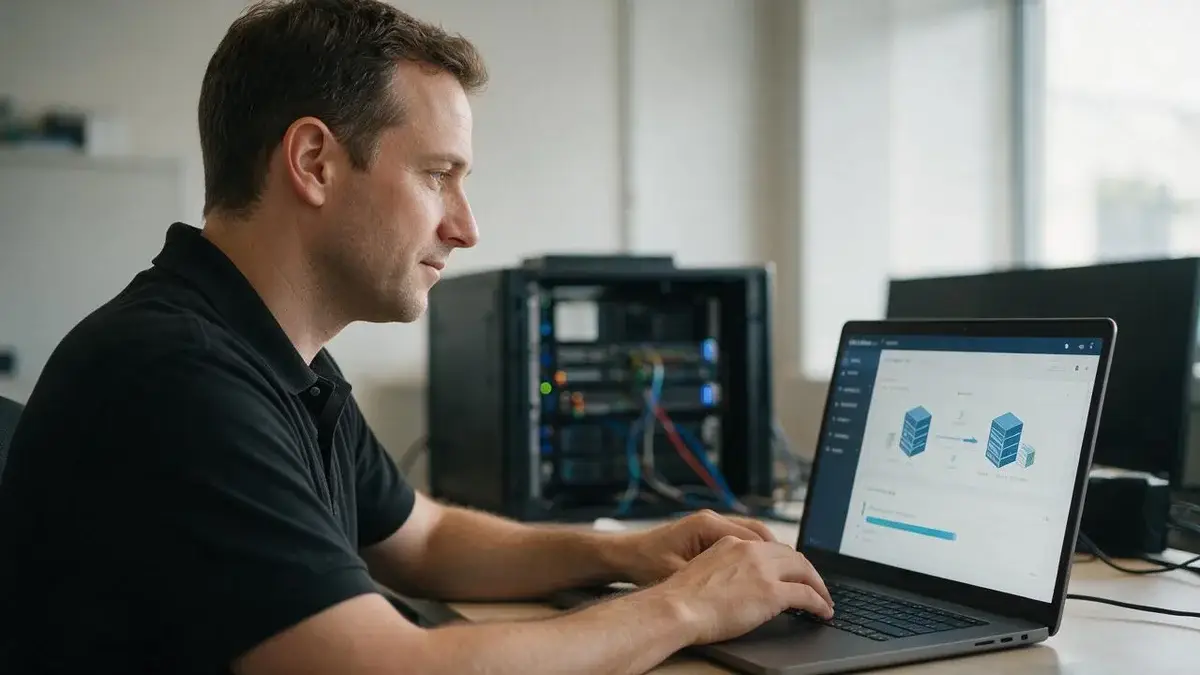
On-premises, cloud, or hybrid, there’s no single right answer, only the right answer for your business. BitNetica helps you choose and build the right home for your servers and data, so you get flexibility and resilience without overspending or overcomplicating.
Cloud that fits your business, not the other way around
Moving to the cloud isn’t about chasing a trend, it’s about outcomes: working securely from anywhere, spending less on aging on-site hardware, and knowing your data is safe even if something happens to your office. We assess what belongs in the cloud and what doesn’t, plan a migration that avoids downtime, and set everything up with security and cost-control built in from day one.
The result is a business that’s more flexible and more resilient. Your team can work from the office, home, or the road with the same secure access. Your servers and files are hosted on reliable, protected infrastructure. And you avoid the twin traps of runaway cloud bills and half-finished migrations that leave you worse off than before.
What we provide
- Cloud migration planning and execution with minimal disruption
- Cloud & hybrid hosting for servers, files, and applications
- Virtual servers & virtualization to replace aging on-site hardware
- Secure remote access so your team works safely from anywhere
- Cloud backup that keeps a protected copy of your data off-site
- Cost management so you pay for what you use and nothing more
Migrations done by someone who's done them before
Our founder has led major migrations and modernizations, including replacing legacy systems with secure, scalable remote-work environments protected by multi-factor authentication. That hard-won experience means your move to the cloud is planned carefully, executed cleanly, and secured properly. Combine cloud with Microsoft 365 and cybersecurity for a modern, protected, work-from-anywhere setup.
On-prem, cloud, or hybrid, not sure which fits? Book a free consultation and we’ll map it out honestly.
The honest answer: not everything belongs in the cloud
Cloud vendors want everything migrated; hardware vendors want everything on-site. We sell neither, so you get the honest version: it depends on the workload. Email and collaboration almost always belong in the cloud. Backup targets and disaster recovery often do. A line-of-business application with heavy local file access, or specialized equipment on your shop floor, may run better and cheaper on-site, and a print shop’s production server has different needs than an accounting firm’s document store. That’s why the service is called On-Prem / Cloud / Hybrid: we design for your workloads, not for a slogan.
Hybrid patterns that work for small business
- Microsoft 365 for email and files, with a lean on-site server for the applications that need it
- Cloud backup and disaster recovery for on-site servers: off-site protection without tape rotation
- Cloud virtual servers (AWS or Azure) for public-facing workloads, keeping internal systems local
- Secure remote access so your team reaches everything from anywhere, without exposing anything to the open internet
Experience that predates the buzzwords
Abe ran virtualization from VMware ESXi version 2 through version 8, built and maintained more than a hundred virtual servers, and operated a hybrid AWS environment at a $60M company, long before “cloud migration” was a marketing phrase. That depth matters when someone has to decide what moves, what stays, in what order, and what it will really cost per month once the free-tier honeymoon ends. We put those numbers in front of you before anything migrates, so the cloud becomes a deliberate business decision instead of an experiment on your budget.
Start with the workload assessment
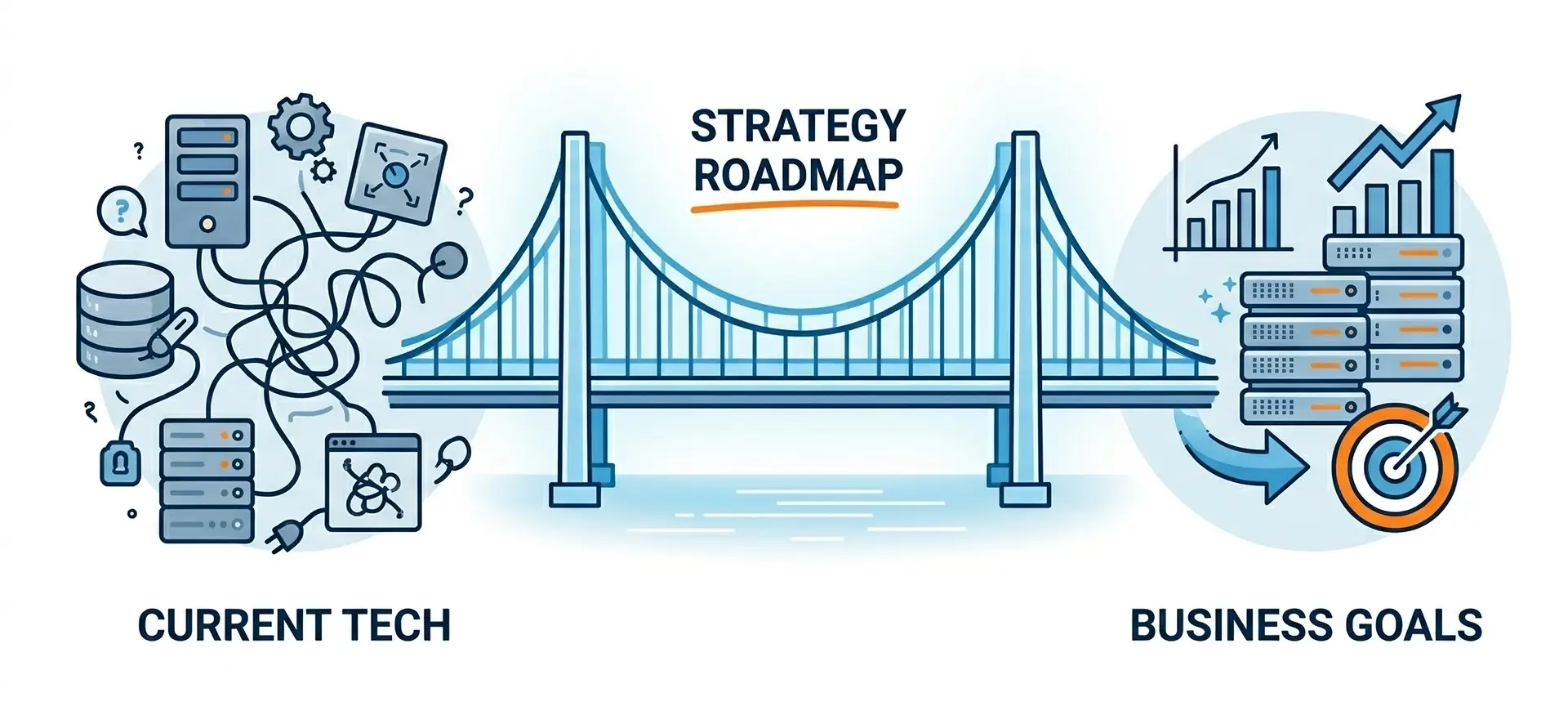
Every good cloud decision starts the same way: list what you run, measure what it needs, and price where each piece lives best. That assessment is where we begin: a clear document showing what should move, what should stay, what it costs monthly either way, and the migration order that avoids disruption. Businesses from Woodstock to Barrington use it to replace cloud anxiety with a plan they can budget. Whether the answer turns out to be full cloud, a leaner server room, or a deliberate hybrid, you’ll make the call with real numbers in front of you. The conversation is free; the clarity is the point.
What a migration actually involves
A cloud migration done right is a sequence, not a leap: inventory and dependency mapping first, so nothing critical is orphaned; a pilot workload to validate performance and cost assumptions; data moved in stages with cutovers scheduled around your business calendar; a parallel-running period where the old system remains a safety net; and finally decommissioning, documentation, and a monthly-cost review one billing cycle in. Downtime is measured in minutes at cutover, not days of chaos, because the plan absorbed the risk before your business had to.
The two classic cloud mistakes
Mistake one is lift-and-shift bill shock: copying servers to the cloud exactly as they ran on-site, then discovering the monthly invoice of hardware sized for peak loads that occur one day a month. Right-sizing and scheduling fix that before it starts. Mistake two is the abandoned hybrid: a migration that stalls halfway, leaving two environments to maintain and secure indefinitely. Both mistakes come from migrating without a plan and a finish line; both are why our engagements begin with the workload assessment and end with the old environment properly retired.
The bottom line: the cloud is a set of tools, not a destination, and the right answer for a Woodstock machine shop differs from the right answer for a Crystal Lake law office. What both deserve is the same disciplined process (measure, plan, migrate deliberately, retire cleanly) from someone who has run production workloads on both sides of the wire. That’s the engagement we offer, and it starts with a conversation that costs nothing.